
Campus
An introduction to the main building, Cloisters and museums at Gilmorehill.
The main building
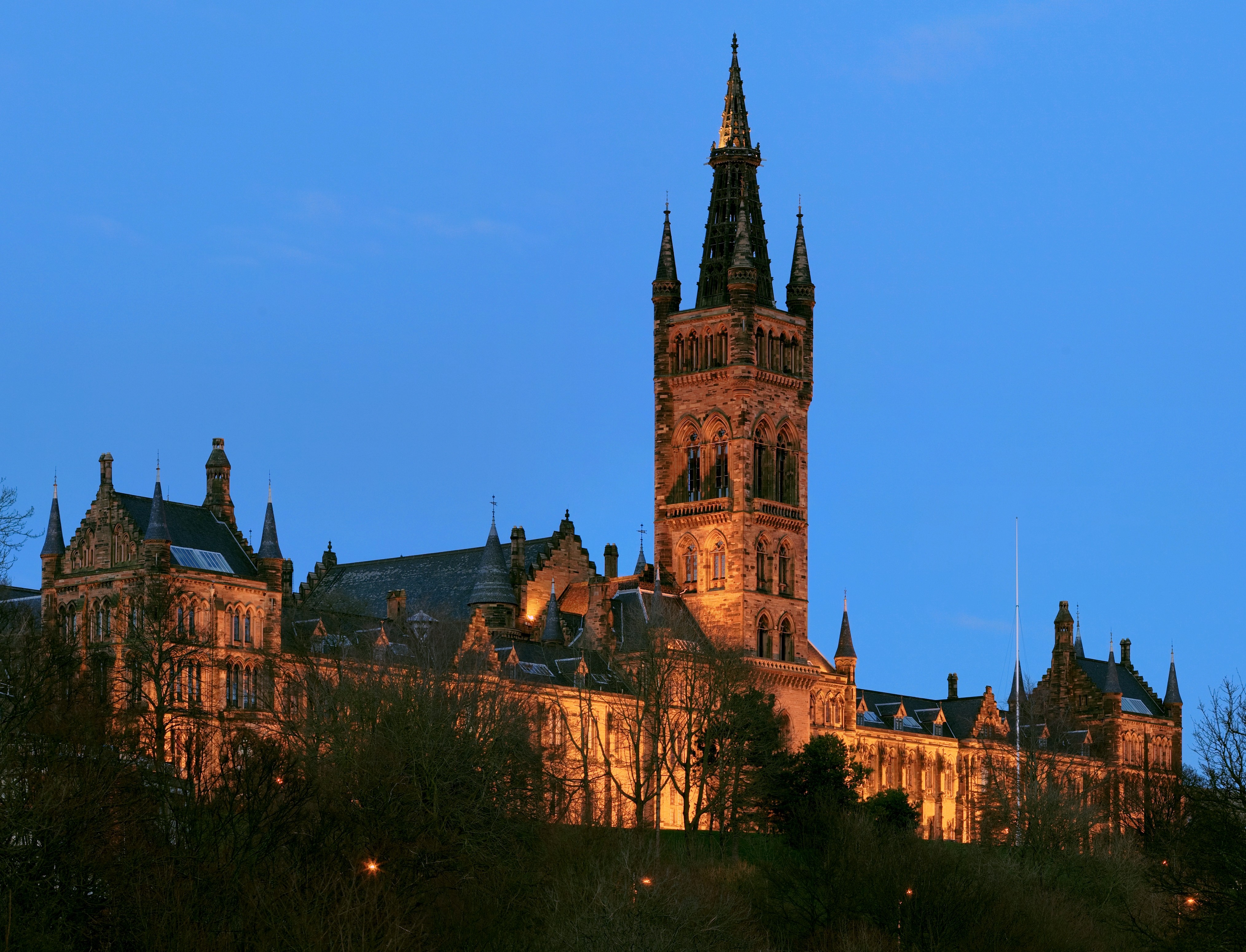
The University moved to Gilmorehill in 1870. George Gilbert Scott's main building uses Gothic Revival forms. The move addressed limits at the old site and changes in the surrounding city; its tower, quadrangles and stone façades now form the University's most recognisable architectural setting.
Today's Gilmorehill campus should not be taken as an image of the University in 1451. The main building belongs to the nineteenth-century relocation, while Smith and Watt were associated primarily with the earlier High Street site.
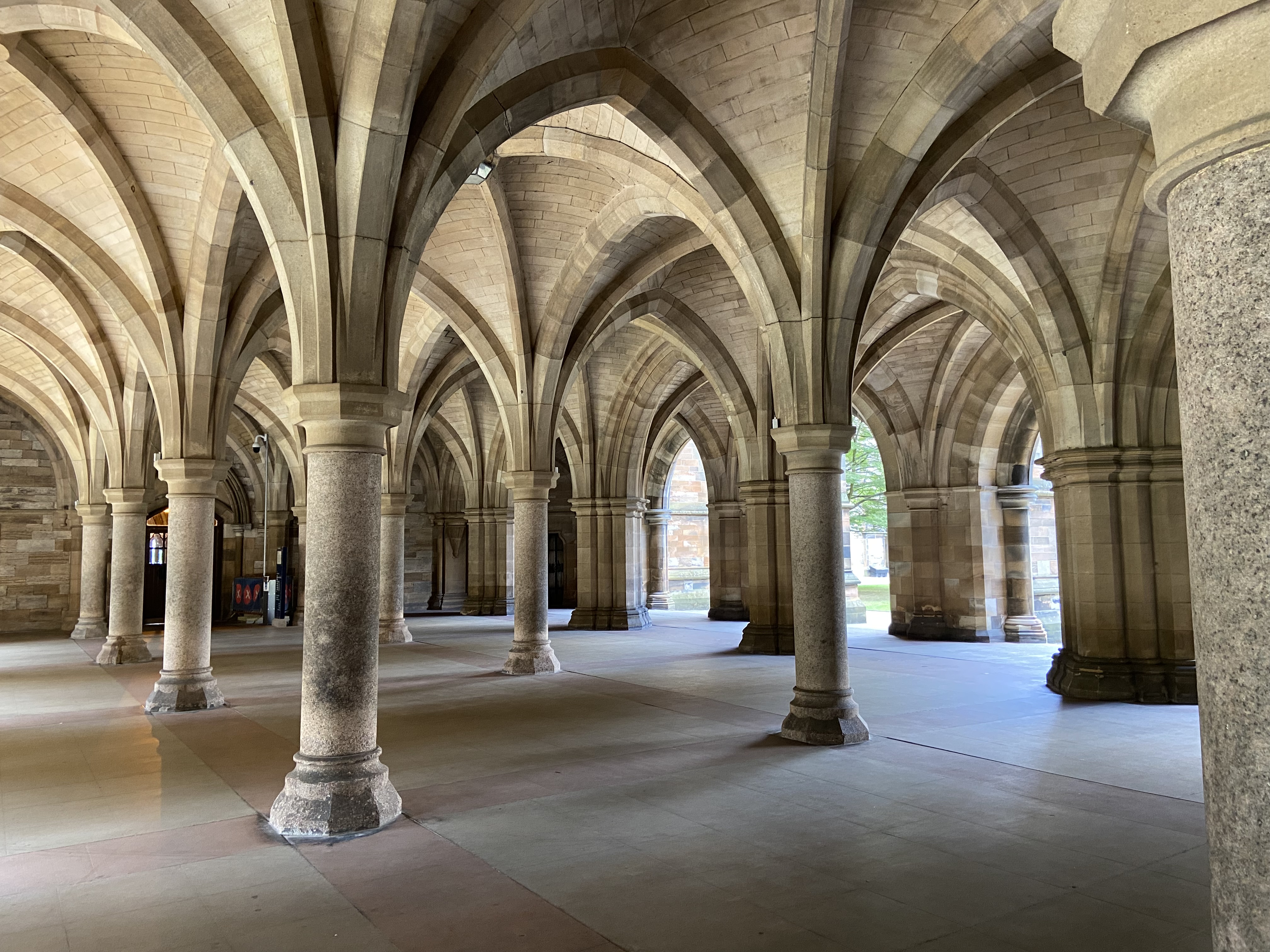
The Cloisters
The Cloisters connect the East and West Quadrangles, with Bute Hall above. Their vaults and columns form a connected space used for circulation and campus visits.
Bute Hall
Bute Hall stands above the Cloisters and hosts graduation ceremonies. The hall and Cloisters are linked spatially; access to the hall can depend on University events.
The Hunterian Museum
The museum is housed in the Gilbert Scott Building and contains objects relating to science, medicine and natural history. Instruments and research material associated with Watt and Kelvin provide evidence of the University's scientific past.
Teaching models and research instruments show that university history concerns working objects as well as books and people. The Newcomen model repaired by Watt was later transferred from Natural Philosophy to the Hunterian Museum.
Hunterian Art Gallery
The Hunterian Art Gallery and Hunterian Museum are separate venues. Check the named venue when looking up exhibitions rather than treating them as the same place.
Planning a visit
The main building, quadrangles and Cloisters provide an introduction to the campus layout. Check the Museum and Art Gallery separately for their exhibitions. Halls, teaching rooms and event spaces are not always open.